Barbecuing: Describing Cultural Differences in Photo Scenes
Aprenda vocabulário avançado para descrever cenas de churrasco em fotos, comparando os estilos brasileiro, americano e australiano.
Churrasco Global: Comparando Culturas através de Imagens
Bem-vindo à nossa atividade de descrição de fotos focada em “Barbecuing” (churrasco). O churrasco é uma experiência culinária mundial, mas as práticas, cortes de carne e até mesmo o equipamento variam drasticamente de um país para outro, especialmente entre o Brasil e nações como os EUA, Canadá, Austrália e Europa.
Neste módulo, você irá expandir seu vocabulário para descrever não apenas o que está acontecendo em uma foto de churrasco, mas também o contexto cultural, a técnica de cozimento e os ingredientes típicos que distinguem cada estilo.
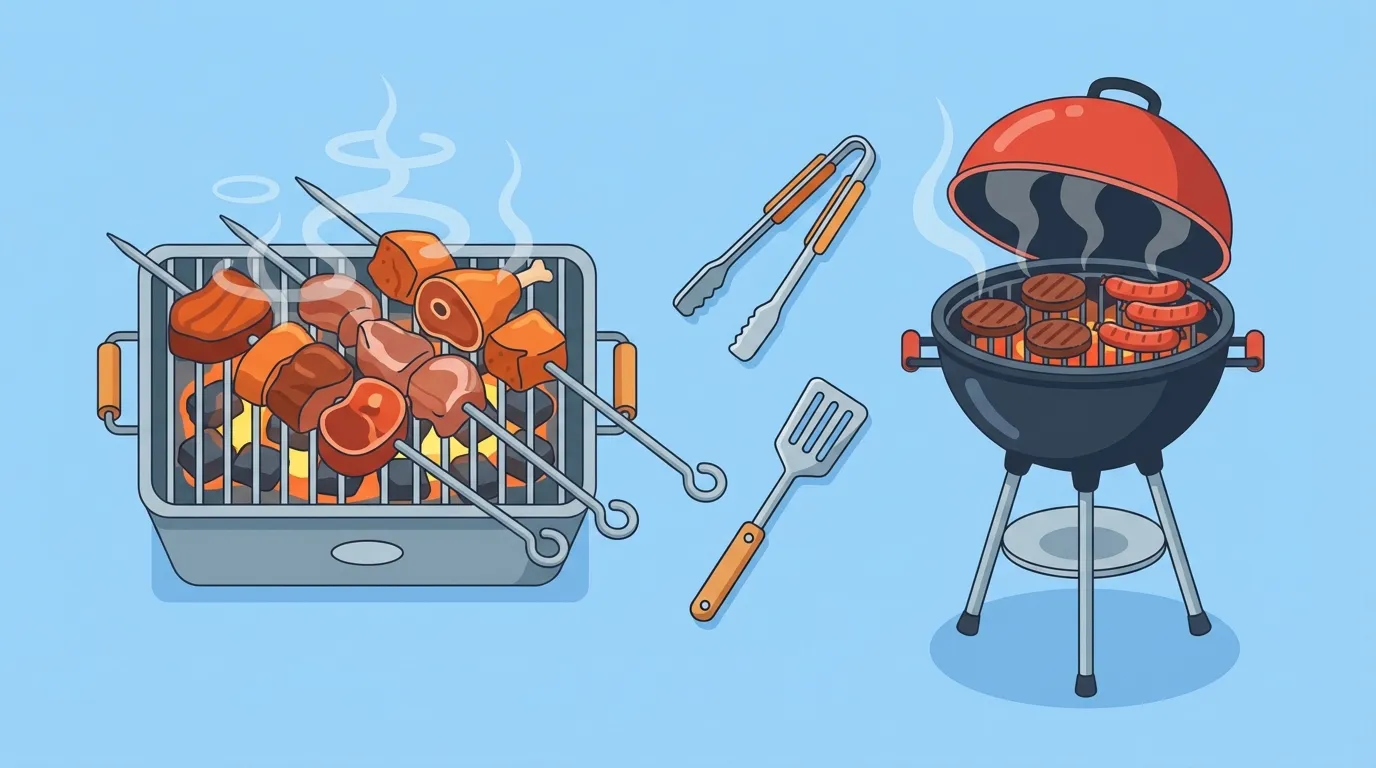
Observe a imagem genérica abaixo e prepare-se para usar o novo vocabulário para discutir as diferenças globais.
1. Vocabulary for Describing BBQ Scenes
Aprimore suas descrições com este vocabulário essencial, focado em técnicas e equipamentos usados globalmente no churrasco.
Skewer Noun
Definição: A long piece of metal or wood used for holding pieces of food together, typically meat, while cooking, especially common in Brazilian churrasco.
Exemplo: The waiter brought the assorted meats directly on a large skewer.
Grilling Verb
Definição: Cooking food quickly over direct, high heat, usually on a grate, typical of quick backyard cookouts.
Exemplo: In the US, many people prefer grilling hamburgers over smoking ribs.
Smoldering Adjective
Definição: Burning slowly with smoke but without a flame, essential for adding flavor during low-and-slow techniques.
Exemplo: We added more wood chips to keep the embers smoldering for the slow-cooked brisket.
Flare-up Noun
Definição: A sudden burst of fire, often caused by fat dripping onto the heat source, which must be managed by the cook.
Exemplo: Be careful of flare-ups when cooking fatty cuts like sausages.
Marinade Noun
Definição: A savory, often acidic sauce in which meat or fish is soaked to flavor or tenderize it before cooking, used heavily internationally.
Exemplo: The chef prepared a strong marinade of vinegar and spices for the pulled pork.
Embers Noun
Definição: Small pieces of glowing coal or wood from a fire, providing steady heat without high flames.
Exemplo: The charcoal had been reduced to hot, red embers, perfect for slow cooking.
Charred Adjective
Definição: Partially burned or blackened on the surface due to intense heat, desired by some for flavor and texture.
Exemplo: I like my steaks to be nicely charred on the outside but medium-rare inside.
Pitmaster Noun
Definição: A highly skilled chef specializing in barbecue, especially slow-smoked meats, a common title in the American South.
Exemplo: The Texan pitmaster claimed his secret was using only oak wood.
Dry Rub Noun
Definição: A mixture of dry spices and seasonings applied to meat before cooking, contrasting with the simple salt used in Brazil.
Exemplo: He applied a spicy dry rub to the ribs before placing them in the smoker.
Side Dish Noun
Definição: A food item served alongside the main course, such as coleslaw, potato salad, or farofa.
Exemplo: In Australia, a classic barbecue side dish is a simple green salad.
2. Discussion: Cultural BBQ Photography
Use as seguintes perguntas para discutir as diferenças culturais que você esperaria ver em fotos de churrasco tiradas em diferentes países.
1️⃣ If a photo shows a small, portable kettle grill, is it more likely to be a Brazilian churrasco or a casual American or European cookout?
Suggested answer in English: It is much more likely to be a casual American or European cookout. Brazilian churrasco usually involves dedicated, often brick or built-in, vertical ‘churrasqueiras’ that accommodate long skewers.
2️⃣ Imagine a photo where the only seasoning visible on the meat is coarse rock salt (sal grosso). Which cultural style is this image most strongly representing, and why?
Suggested answer in English: This image strongly represents the traditional Brazilian churrasco style, where the focus is on the quality of the cut and minimal seasoning (usually just salt) rather than heavy marinades or barbecue sauces.
3️⃣ Describe the primary difference in technique that you would observe in a photo of Texas-style brisket being cooked versus picanha on a rotating skewer.
Suggested answer in English: The brisket photo would show the meat being cooked “low and slow” in a smoker, heavily emphasizing wood smoke (smoldering). The picanha photo would show the meat cooked quickly and directly over charcoal or embers.
4️⃣ A photo shows guests serving themselves from a large buffet table loaded with baked beans, potato salad, and corn on the cob. Where might this scene be taking place?
Suggested answer in English: This scene is highly characteristic of North American BBQ, particularly the US South, where heavy, often sweet, side dishes like baked beans and potato salad are essential components.
5️⃣ If a photo captures a 'sausage sizzle' with bread, onions, and cheap sausages being sold outside a voting station or hardware store, where is the location likely to be?
Suggested answer in English: This is a classic scene in Australia or New Zealand. The “sausage sizzle” is a community fundraising staple, involving simple grilled sausages (often called ‘snags’) served in a slice of bread.
6️⃣ In a Brazilian churrasco photo, what typically replaces the variety of sweet and tangy barbecue sauces prominent in an American setup?
Suggested answer in English: Instead of sweet barbecue sauces, Brazilian photos often feature fresh, acidic side condiments like ‘vinagrette’ (a salsa made of finely chopped tomatoes, onions, and bell peppers) and ‘farofa’ (toasted manioc flour).
7️⃣ Look at a photo depicting the 'pitmaster' handling the meat. If they are wearing heavy leather gloves and dealing with enormous cuts, what does this suggest about the cooking time?
Suggested answer in English: The heavy gloves and enormous cuts (like whole pork shoulders or briskets) strongly suggest a very long, low-and-slow cooking time, possibly exceeding 12-16 hours, common in regional American BBQ.
8️⃣ What fuel source, evident in a photo by the lack of smoke and a very clean setup, indicates a more modern, convenience-focused barbecue style, typical of North American suburban backyards?
Suggested answer in English: The lack of smoke and clean setup usually indicates a gas or propane grill. This fuel is popular for its convenience and rapid temperature control, contrasting with the authentic flavor of wood or charcoal embers.
9️⃣ How would you describe the atmosphere in a photo of a European backyard barbecue that focuses heavily on small, personalized portions of chicken wings, halloumi cheese, and vegetables?
Suggested answer in English: This suggests a lighter, more varied, and perhaps health-conscious style. It is less about massive amounts of red meat (like Brazil) and more about small bites suitable for mingling and sharing.
🔟 If a photo shows a wide variety of meats being carved continuously by a single attendant moving between tables (not self-service), what specific Brazilian term describes this service style?
Suggested answer in English: This service style is called ‘Rodízio’, where various cuts of meat are continuously served table-side from large skewers until the diner signals they have had enough.
3. Quiz: Test Your Description Skills
Use o vocabulário e o conhecimento cultural adquiridos para responder a estas questões de múltipla escolha focadas na descrição de fotos de churrasco.