Bat Activity Triples in New Zealand
O monitoramento registrou mais de três vezes a atividade de morcegos-de-cauda-longa perto da Heaphy Track, indicando que o controle de predadores está ajudando.

Level 1 (A2)
🎧 Listening Audio (Level 1)
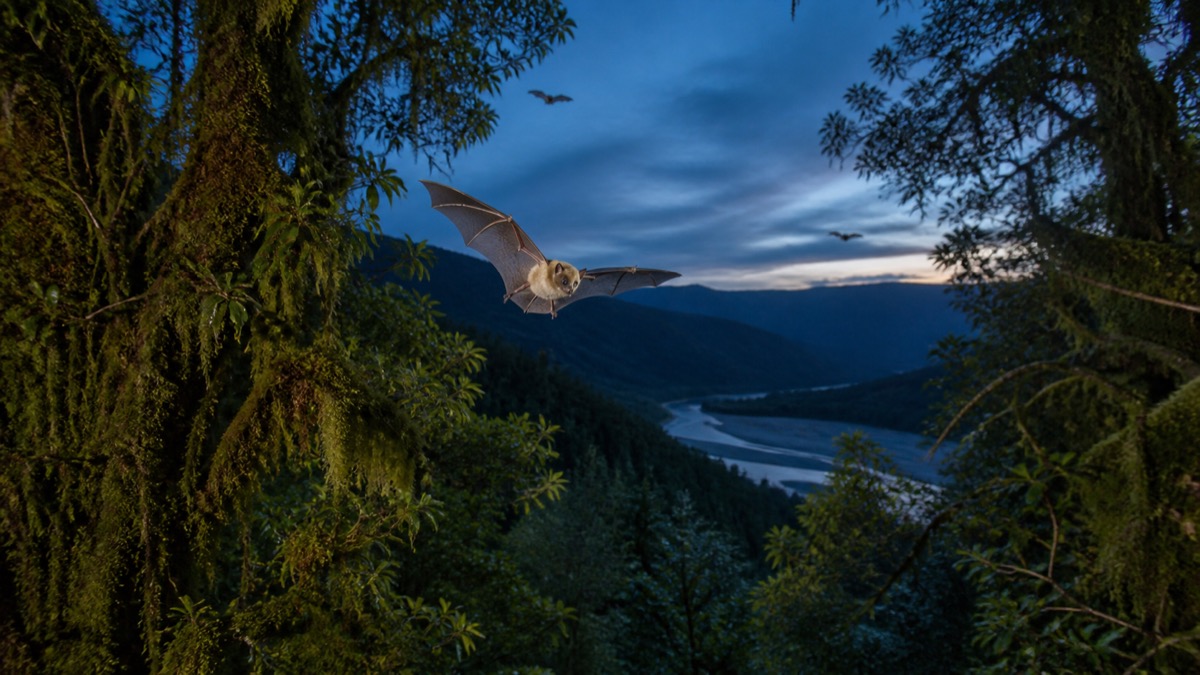
Long-tailed bats are becoming more active near the Heaphy Track in New Zealand. The track is in Kahurangi National Park. In February 2026, a team studied the bats along the Heaphy and Gunner rivers. The team put digital recorders at 25 places for 12 nights with good weather. The machines listened for the high sounds that bats make when they fly. In 2018, the average result was 1.79 bat passes. In 2026, it was 6.75 passes. This means the recorded bat activity was more than three times as high. At one place, a recorder counted more than 500 passes on three different nights. However, a pass rate is not an exact count of all the bats. It shows how often the machines detected bats in that area.
The Department of Conservation says predator control is helping. Long-tailed bats rest and have their babies in holes in old trees. Rats, stoats, and wild cats can enter these holes and kill them. When there are fewer predators, bats have safe periods to breed and raise their young. Female bats meet in special groups, move between trees, and usually have only one baby each year. An adult female can live for more than 20 years, so every adult is important. The monitoring also suggests that bats are moving from a known breeding area near the Gunner River toward the Heaphy River. Walkers may now have a better chance of seeing the small bats at sunset. The work must continue because more tree seeds can bring more rats and stoats. The new results are good news, but the bats still need protection.
🔑 Key Vocabulary (Level 1)
🗣️ Let's Discuss (Level 1)
- 1Where did the team study the bats?
- 2What did the digital recorders listen for?
- 3How was the average result in 2026 different from the result in 2018?
- 4Why are holes in old trees important for long-tailed bats?
- 5When could walkers have a better chance of seeing the bats?
✍️ Exercises
Practice what you learned in Level 1
Quick Quiz
What did the machines record?▼
Answer:
Bat sounds as bats flew past
Which animals can enter the bats' tree holes?▼
Answer:
Rats, stoats, and wild cats
Does the pass rate give an exact count of all the bats?▼
Answer:
No, it measures detected activity