Brazil Brings Caatinga Restoration to COP17
O Brasil levou à COP17 da UNCCD uma experiência de restauração participativa da Caatinga que une saberes comunitários, ciência e tecnologias sociais.

Level 1 (A2)
🎧 Listening Audio (Level 1)
Brazil is sharing ideas about caring for the Caatinga at an international meeting. The meeting is COP17 of the United Nations Convention to Combat Desertification. It is taking place in Ulaanbaatar, Mongolia, from 17 to 28 August 2026. On 21 August, a Brazilian roundtable presented EtnoCaatinga and Recaatingamento. These projects work in the Caatinga, a dry forest in northeastern Brazil. The roundtable brought together government representatives, scientists, farmers, Indigenous peoples, and traditional communities. Its purpose was to discuss ways to protect land and help people live with a dry climate.
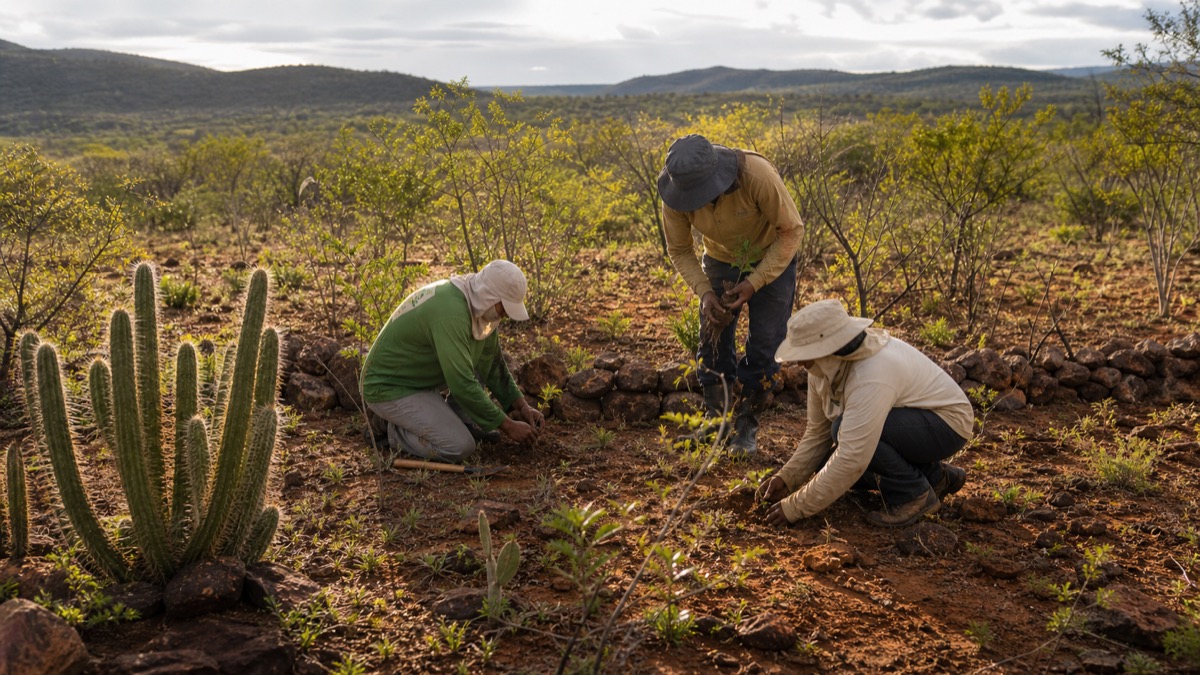
Recaatingamento means helping damaged Caatinga land recover with local people. Communities can protect an area from too many grazing animals, plant native trees, collect seeds, slow rainwater, and reduce erosion. They can also share knowledge about the plants, animals, soil, and water around their homes. The EtnoCaatinga project plans to work with communities in Bahia, Pernambuco, and Piauí. Its official plan includes support for 300 families and a target to protect 300 hectares of damaged land. These are project goals, not finished results.
The Brazilian team discussed restoration, local knowledge, native seeds, public policy, and social technologies. A social technology is a practical solution created or adapted with a community. Small stone barriers, for example, can hold soil and slow water after rain. This work can make the soil healthier and help native plants return. It may also support food production and income. The COP17 session was a community knowledge exchange with countries that face similar dry-land problems in Africa and Latin America. However, the meeting does not prove that other countries have adopted the Brazilian methods. It creates a chance to compare ideas, build partnerships, and learn from experience. The next step is to complete the planned work and publish clear results.
🔑 Key Vocabulary (Level 1)
🗣️ Let's Discuss (Level 1)
- 1Where and when is COP17 taking place?
- 2What does Recaatingamento try to do?
- 3How can a small stone barrier help damaged soil?
- 4Why is local knowledge important in a restoration project?
- 5Which environmental project in your region would be useful to share internationally?
✍️ Exercises
Practice what you learned in Level 1
Quick Quiz
What is the main purpose of Recaatingamento?▼
Answer:
To help damaged Caatinga land recover with local people
What do the figures for 300 families and 300 hectares represent?▼
Answer:
Project goals
What can small stone barriers do?▼
Answer:
Hold soil and slow rainwater