NASA Studies the Sun During a Total Eclipse
A NASA observou o eclipse solar total de agosto de 2026 a partir do solo, de um jato, de balões científicos e do espaço para estudar o Sol e a atmosfera da Terra.

Level 1 (A2)
🎧 Listening Audio (Level 1)
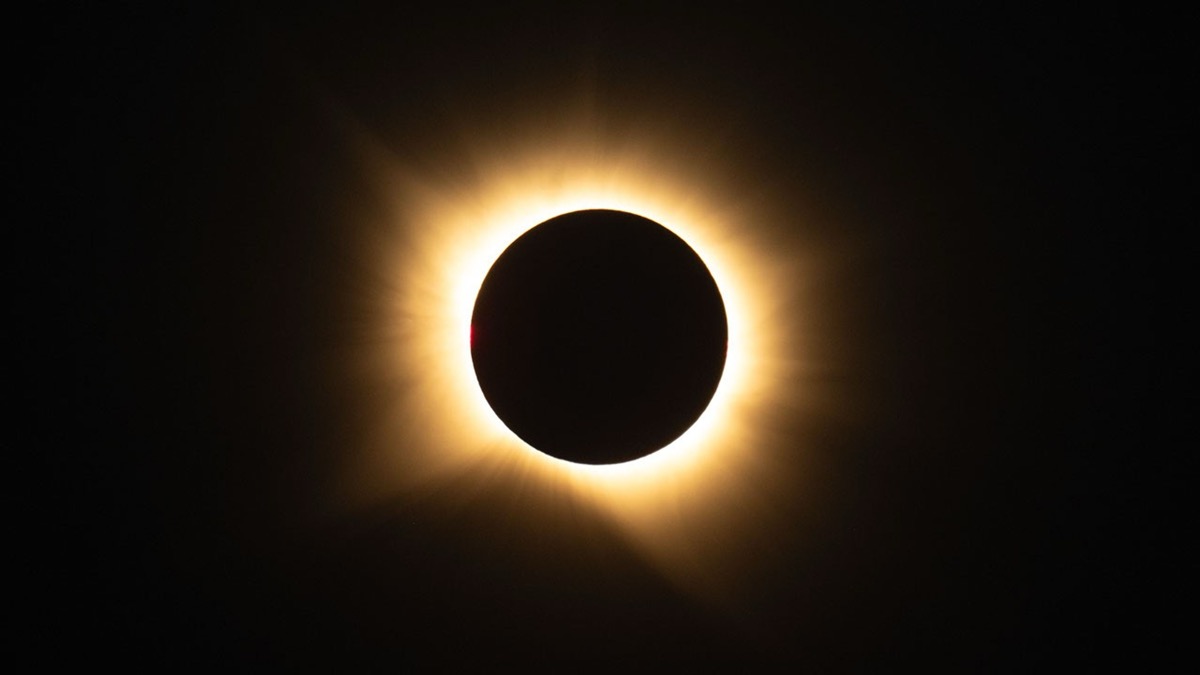
On August 12, 2026, people in Greenland, Iceland, and Spain saw a total solar eclipse. During this event, the Moon moved in front of the Sun and covered it for a short time. Daylight became dark in places along the eclipse path. The event also made the Sun's outer atmosphere easier to see. This bright outer area is called the corona. NASA photographers took pictures from Spain, while other cameras watched from different places. In northern Maine, a photographer even captured the International Space Station moving in front of the partly covered Sun. Astronaut Jessica Meir also photographed the partial eclipse from the space station, about 262 miles above Earth.
NASA used the eclipse for science, too. A research jet flew at about 50,000 feet near Iceland. Cameras on the plane recorded the corona in visible and infrared light. Flying high helped the cameras avoid clouds and gave the team more time to watch the eclipse. Students also joined the work. Teams in Iceland and Spain launched scientific balloons with cameras and other instruments. The balloons watched the Moon's shadow and collected information about Earth's lower atmosphere. Clouds blocked some views from the ground in Iceland, but the instruments on the balloons still gathered data.
Scientists want to understand the corona and learn how a short period of darkness changes the atmosphere. They will study the new images and measurements over the next few months. This means the mission collected useful observations, but the final scientific answers are not ready yet. The project connected professional researchers, pilots, astronauts, photographers, and students. Together, they viewed the same eclipse from the ground, the air, and space. The result is a detailed record of a beautiful natural event and new information for future research.
🔑 Key Vocabulary (Level 1)
🗣️ Let's Discuss (Level 1)
- 1Which three places were in the path of the total eclipse?
- 2Why is the corona easier to see during a total solar eclipse?
- 3What did the research jet help NASA observe?
- 4How did students participate in the science project?
- 5Why are the final scientific answers not ready yet?
✍️ Exercises
Practice what you learned in Level 1
Quick Quiz
What covered the Sun during the eclipse?▼
Answer:
The Moon
Where did student teams launch scientific balloons?▼
Answer:
Iceland and Spain
Are the final scientific answers ready?▼
Answer:
No, scientists will study the data