Old AI Predictions That Came True
Um artigo da BBC mostra que muitos debates sobre IA (medo, promessas e apego às máquinas) já existiam há décadas. Hoje, a diferença é o volume de investimento e o impacto social dessas tecnologias.

Level 1 (Iniciante – A2)
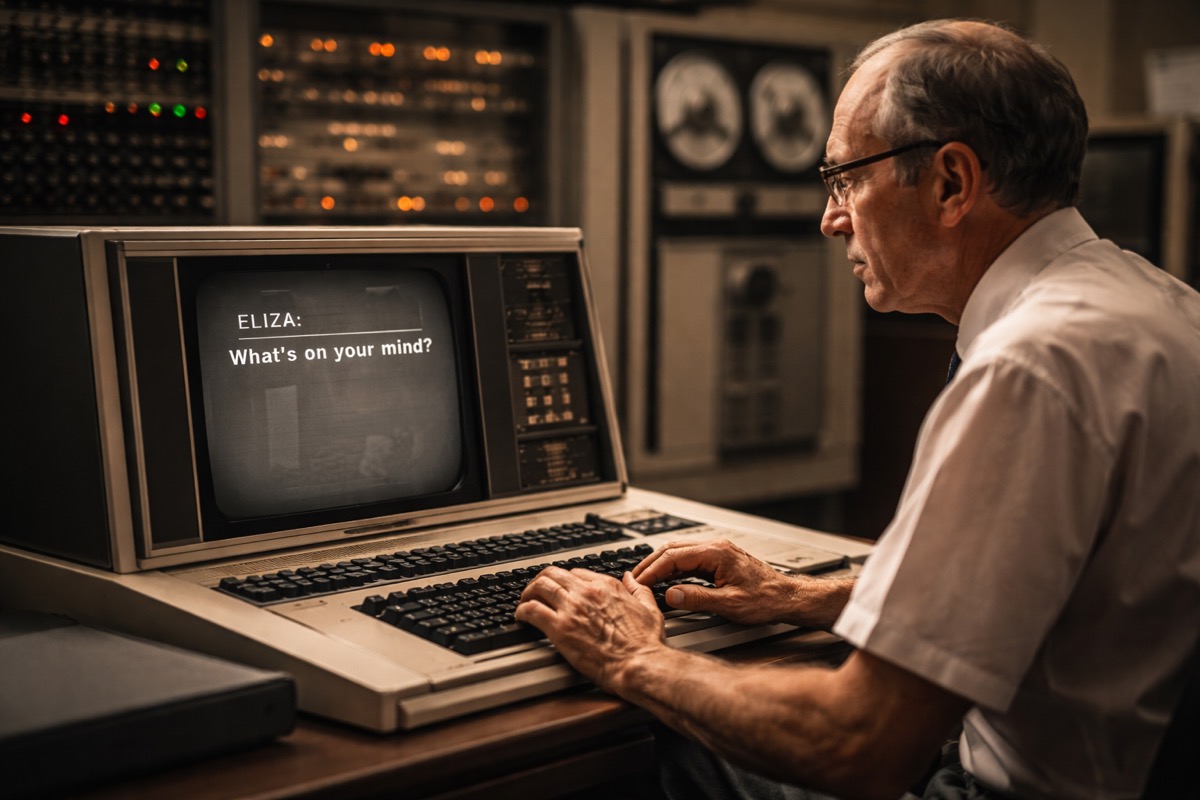
Many people use a chatbot today. Some people talk to it for therapy or to feel less alone. This sounds new, but it is not new. In the 1960s, a scientist made a program called Eliza. It used simple rules to answer and it looked like a real conversation. Some people felt close to the program. They treated the machines like a person. Since the 1950s, people also worry about machines replacing workers. Another big difference today is money. Now there is more investment in AI, so companies build faster and bigger systems. But the same questions stay: Can machines really understand us, or do they only imitate us?
🔑 Key Vocabulary (Level 1)
🗣️ Let's Discuss (Level 1)
- 1Do you use a chatbot today?
- 2Would you talk to a chatbot for therapy?
- 3Do you think machines can understand feelings?
- 4Do you feel comfortable talking to a machine?
- 5What is one good use of AI in daily life?
✍️ Exercises
Practice what you learned in Level 1
Quick Quiz
What do many people use today?▼
Answer:
A chatbot
What did Eliza do in the 1960s?▼
Answer:
It imitated conversation
What is different today, according to the text?▼
Answer:
More investment in AI