Indigenous Knowledge Brings Science to Life
Um programa no Pilbara conecta Conhecimento Indígena, aprendizagem em Country e o currículo de ciências para tornar as aulas mais locais, práticas e colaborativas.
Level 1 (A2)
🎧 Listening Audio (Level 1)
Schools and community groups in the Pilbara, in northern Western Australia, recently met in Karratha and Derby for the Living STEM conference. STEM means science, technology, engineering, and mathematics. The program helps teachers connect school science with local Indigenous Knowledge. It is led by CSIRO, Australia's national science agency, in partnership with Chevron Australia.
Living STEM uses an approach called Two-way Science. Teachers, Indigenous knowledge holders, rangers, community groups, and science educators plan learning together. Students can study the Australian curriculum and also learn how local people understand plants, animals, seasons, land, and water. The purpose is not to put one kind of knowledge above another. It is to build respectful connections and make lessons more meaningful for the place where students live.
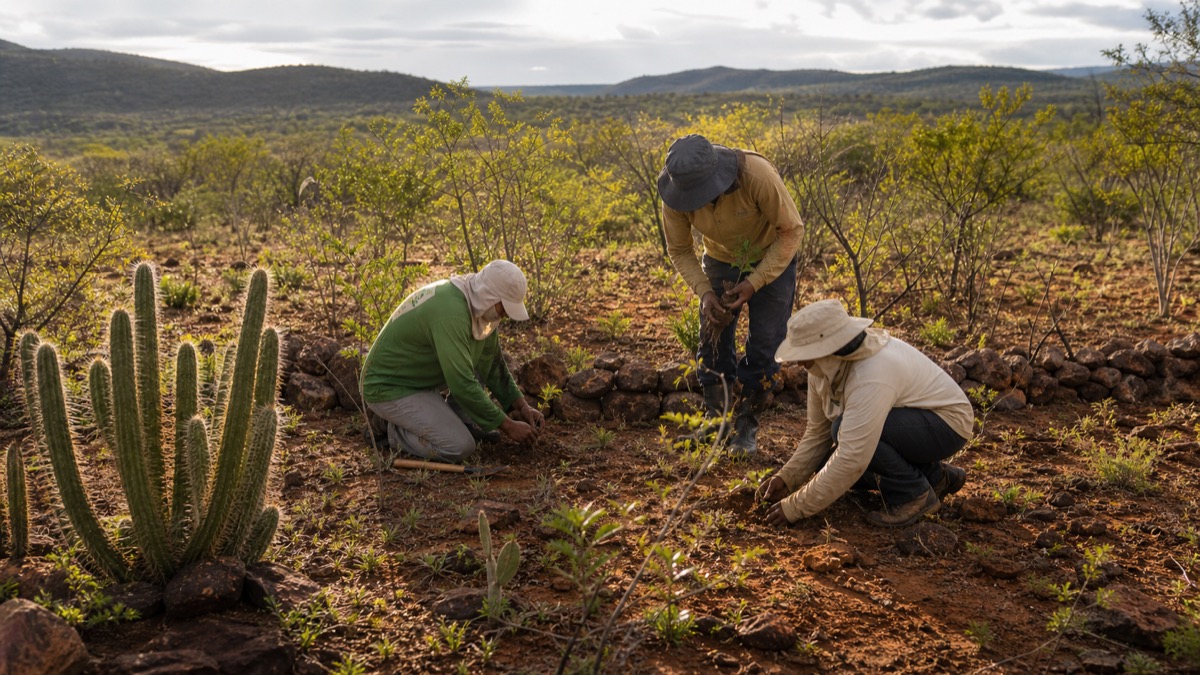
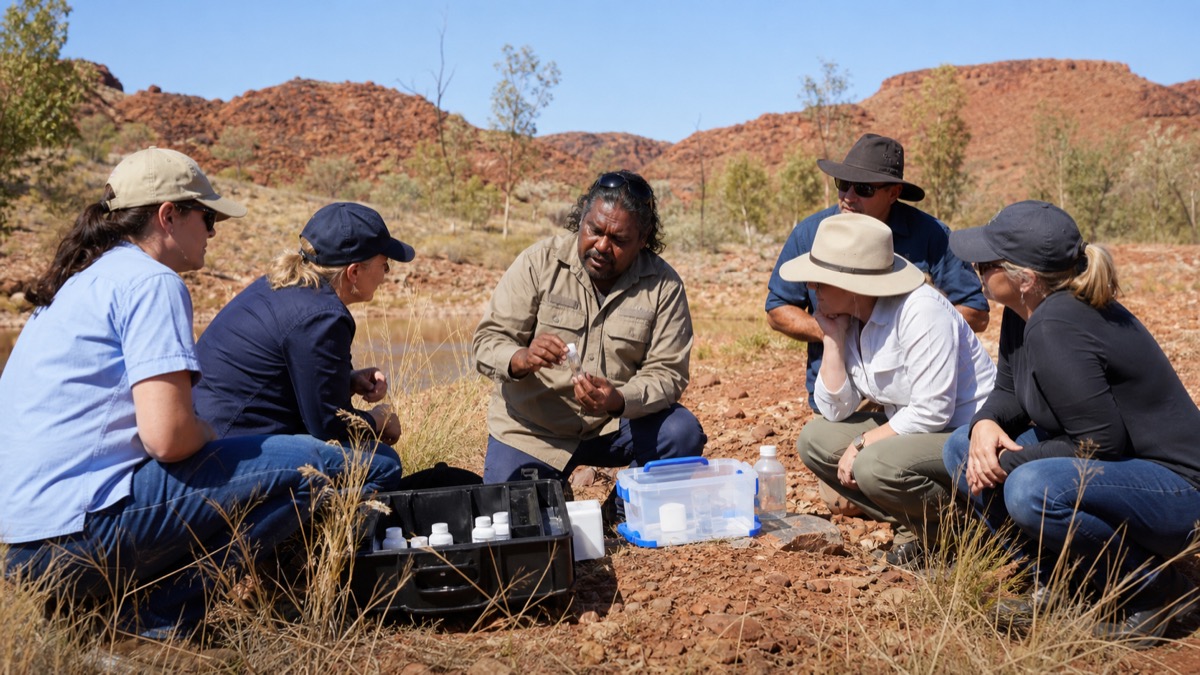
At the conference, educators learned on Country with Ngarluma and Yindjibarndi knowledge holder Clinton Walker. They walked along part of the Yaburara Heritage Trail. They discussed bush medicines, rock art, seasonal knowledge, and Caring for Country. Other workshops connected science with water testing, native fish, cool burning, plants, weaving, and traditional food preparation.
These activities are examples of hands-on learning. People do not only read information in a classroom. They observe, ask questions, test water, explore the landscape, and learn directly from community members. A free digital tool called Pannotator also uses 360-degree images to help students explore biodiversity.
The event showed teachers practical ways to bring local culture and science into lessons. Participants said that this approach can help students connect new ideas with knowledge from their families and communities. The latest report describes promising experiences and stronger relationships. It does not claim that one conference has solved every challenge in science education. Living STEM is a continuing partnership built through time, trust, and shared work.
🔑 Key Vocabulary (Level 1)
🗣️ Let's Discuss (Level 1)
- 1Where did the 2026 Living STEM conference take place?
- 2Who works together in the Two-way Science approach?
- 3What did educators learn about on the Yaburara Heritage Trail?
- 4Why can hands-on learning make science easier to understand?
- 5What part of your local community could become a place for learning?
✍️ Exercises
Practice what you learned in Level 1
Quick Quiz
What does Living STEM connect?▼
Answer:
Local Indigenous Knowledge and school science
Where did educators learn on Country?▼
Answer:
Along part of the Yaburara Heritage Trail
Which activity happened at a workshop?▼
Answer:
Testing water